Ten Voices, One Foundation
Inside IANEC's first founders' meeting: how a circle of educators from five continents agreed on the Purpose, Principles and Goals behind the association.
IANECLEGAL PROCEDURES
Ten Voices, One Foundation
Inside the meeting where IANEC agreed on its Purpose, Principles and Goals
At 14:00 in Maribor, it was 08:00 in New York and 21:00 in Tokyo. On Saturday, 20 June 2026, screens lit up across five continents at once. Ninety minutes on the agenda. No votes to cast. One task: to agree, together, on why the International Association for Nature-based Early Childhood (IANEC) exists at all.
This was our founders' meeting — the first time the whole circle met as a group, the meeting our previous post, “How it began,” told you was coming.
A circle from every continent
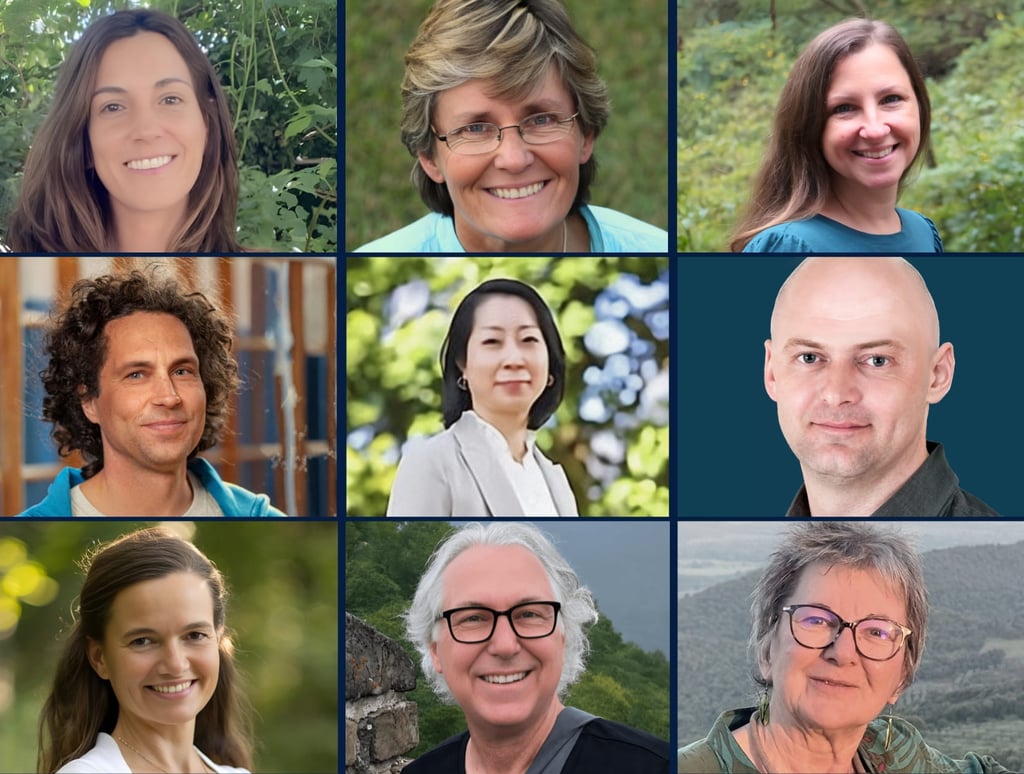
Among those who joined the call: Dr Elizabeth Henderson (Scotland), Dr Dušan Bartůněk (Czech Republic), Uroš Jelen (Slovenia), Monica Wiedel-Lubinski (USA), Pamela Martinez (South Africa), Midori Mitsuhashi (Japan), Doug Fargher (Australia), Niki Buchan (Scotland), Szymon Godawa (Poland), and me, Klavdija Svet, from Slovenia.
We began with introductions — name, country, and one sentence completing: “IANEC will have succeeded if…” Mine was this: IANEC will have succeeded if each of us first tries to understand others instead of seeking to be understood. Different words, different countries around the circle — and underneath them, the same idea kept returning.
Before we moved into the working agenda, I said something I meant completely: you said yes when you could have said you were too busy — most of you are. You said yes when you could have said you were too tired — many of you are. You said yes to building, rather than only joining.
That set the tone for the ninety minutes that followed. After a short walk through the founding roadmap — the federation model, registration in Slovenia, the sequence in which the Statute and the founding Memorandum of Understanding would be signed — we moved into the real work: three fifteen-minute discussion blocks, one each for Purpose, Principles, and Goals, working through the draft text of Articles 8 to 10 of our Statute. Amendments were captured live, on the page, as we talked. No vote was needed. By the final block, agreement had already found itself.
What we agreed
Our Purpose, as we settled it: to advance the well-being, development, and lifelong resilience of young children by promoting nature-based early childhood education worldwide, and to connect and strengthen — across borders — the national associations, networks, programmes, researchers, and educators who already carry out this work. One distinction shaped everything else we discussed: IANEC works alongside national associations, not above them. Its role is to connect and amplify, not to regulate or replace.
Ten principles now sit underneath that purpose:
Federation and subsidiarity — decisions made as close as possible to the national and local level.
Respect for national contexts, cultures, traditions, and legal systems.
Respect for the rights and education systems of First Peoples, consistent with the UN Declaration on the Rights of Indigenous Peoples.
Care for the Earth — recognising that we live in reciprocal relationship with it.
The ecology of childhood — a child's connection to place, nurtured through outdoor experiential learning.
Children's rights, in particular the right to play and to a connection with nature, under the UN Convention on the Rights of the Child.
Safety through a risk-benefit approach, child safeguarding, and ethical conduct.
Inclusion, non-discrimination, equal opportunity, and cultural sensitivity.
Evidence-informed practice and the open exchange of knowledge.
Transparency, democratic governance, and non-profit operation.
From those principles came nine goals — the practical “how.” A shared international vocabulary for forest kindergartens and related nature-based models, one that translates differences between national frameworks rather than erasing them. Minimum international quality principles that complement, never replace, national standards. Mechanisms of comparability and reciprocity between existing national systems, instead of one global certificate. A working bridge between research and everyday practice. A global directory that makes the movement visible to itself, and to the families looking for it. Coordinated international advocacy on shared themes — children's right to nature, safety, recognition — respecting each country's legal context. A professional community for educators: exchange, training, peer support. A shared commitment to child safeguarding across the movement. And a platform for dialogue that fosters an animate Earth, including training that supports ecological worldviews and indigenous and traditional pathways of learning.
Reading it back now, what stands out to me most is what we chose not to build. Not a licensing body. Not a single global standard. Not a head office issuing instructions to national movements that have spent decades learning their own contexts. We chose to build a connector — something that helps the knowledge already alive across this circle travel further than any one of us could carry it alone.
What comes next
The text we agreed on 20 June didn't stay in a meeting room. It became Articles 8, 9, and 10 of the IANEC Statute — the document our founding circle would go on to formally adopt at the Founding Assembly a few weeks later. We'll tell you about that meeting next.
For now, if you lead a forest kindergarten, a nature-based programme, or a national association anywhere in the world, we would love to know you. Visit our global directory, add your programme to the map, and tell us: does the purpose we agreed on 20 June sound like the movement you know? We built it hoping you would recognise yourself in it.
Written by: Klavdija Svet

© International Association For Nature-based Early Childhood
Established in Slovenia. Connecting the world.
Pregljeva 9, Maribor, Slovenia


Together we can achieve it!
About