

The International Association for Nature-based Early Childhood began with a recognition that arrived in the same form in every country: here was a movement that worked — and yet its practitioners were largely invisible to one another.
Forest kindergartens have existed for over a century. The German Waldkindergarten. The Scandinavian friluftsliv tradition. The British forest school movement. Japan's rich network of nature-immersive preschools. Each has developed its own pedagogy, its own standards, its own community of dedicated practitioners. Each is strong in its own place.
But an educator building a nature preschool in Costa Rica had no easy way to find her counterpart in New Zealand who had solved the same problem five years earlier. A researcher in South Korea studying outdoor learning outcomes had no global dataset to work with. A parent in São Paulo searching for a forest kindergarten had no single place to look — or even a clear sense of what to look for.
This is the gap we kept running into. Not a lack of good work. A lack of connection.
IANEC was founded in Slovenia — a country where forests cover 60% of the land and outdoor childhood is woven into cultural life — by 12 people from 6 continents who had spent their careers in and around forest education: Dr Elizabeth Henderson (Scotland), Dr Dušan Bartůněk (Czech Republic), Uroš Jelen (Slovenia), Monica Wiedel-Lubinski (USA), Guadalupe Antao Cortez (Argentina), Pamela Martinez (South Africa), Dr. Midori Mitsuhashi (Japan), Doug Fargher (Australia), Niki Buchan (UK), Dr. Szymon Godawa (Poland), Sally Wren Stevens (USA) and Klavdija Svet (Slovenia). Their founding question was not does this work. The research on that is clear. Their question was: why is the movement still so fragmented — and what would it take to change that?
The answer was IANEC. And the first thing they discovered, once they began sharing the idea, was that the movement had been waiting for exactly this.
What we do
We are building the first global map of forest kindergartens — a living directory that makes the movement visible to itself, to families, and to the policymakers who need to see its scale. When you join IANEC, you join a network of organisations and practitioners across dozens of countries who share your conviction that children learn best when they are outside.
Connect
We are developing a shared quality framework — not a global certification imposed from above, but a set of minimum principles developed with practitioners, that allow standards to be recognised across borders. A forest school educator in the UK should be able to practise in Germany. A programme in Canada should be able to demonstrate its quality to funders in Japan. We are building that bridge.
The research on nature-based early childhood education is growing fast — and it is scattered across journals, institutions, and languages. IANEC curates and translates that evidence into resources that practitioners can actually use: evidence briefs, practitioner guides, policy summaries, and a growing online library of the world's best thinking on outdoor childhood education.
Forest kindergartens are still not formally recognised as a valid early childhood education model in most of the world. Operating one often means fighting regulatory frameworks designed for indoor classrooms, justifying your practice to local authorities, and doing it without the backing of any international standard or body. IANEC is the voice that changes that — an evidence-grounded, internationally recognised federation that can walk into a ministry of education and make the case for childhood outdoors.
Strengthen
Learn
Advocate








These are not aspirational phrases. They are the principles that guide how we make decisions, how we treat our members, and how we speak about our work.
Rooted in practice
Our credibility comes from the forest floor, not the conference room. We listen to practitioners first. Every standard, framework, and resource we develop is tested against the reality of what it means to run a forest kindergarten — in all weathers, in all cultures, with real children.
Open and inclusive
Forest kindergartens go by many names — forest school, nature preschool, Waldkindergarten, udeskole, friluftsliv, outdoor nursery. The form varies by culture, climate, and context. We welcome the full diversity of this movement. Our shared ground is the conviction that children belong outdoors.
Evidence-informed
We hold ourselves to the same standard we ask of practitioners: show your reasoning, cite your sources, acknowledge what you don't know. We support research, commission it where gaps exist, and never make claims we cannot substantiate.
Collaborative, not controlling
IANEC is a federation of equals. We exist to support, amplify, and connect the organisations and practitioners who are already doing excellent work — not to regulate, rank, or centralise. National associations remain sovereign in their own contexts. We provide the global layer that makes local strength more visible.
Built for the long term
The children in today's forest kindergartens will be the first generation shaped by a globally connected movement. We build for them — with patience, rigour, and an enduring belief that what we are doing matters.
Our Values
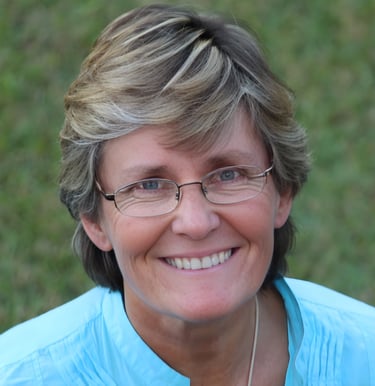
Niki is widely regarded as a leading voice in nature pedagogy with more than 40 years of experience. Having lived and worked in South Africa, Scotland and Australia, she brings an international perspective to her work and is the author of numerous books. In South Africa Niki was a childminder, the owner and head of a preschool and later established another early childhood service for children from birth to seven years. After immigrating to Scotland, Niki became Head of Preschool at Morrison’s Academy. She went on to help establish and lead two of Scotland’s first outdoor Nature Kindergartens before being invited to work in Australia. There, she spent 12 years supporting and mentoring Early Childhood settings and Primary schools to develop a nature-based programme. Niki has delivered professional learning across Australia, England, Wales, Ireland, South Korea, South Africa, China, Norway, New Zealand, Iceland, the United States and Canada. She has organised and facilitated international study tours exploring play-based and nature-based practice in Scotland, England, Sweden, Norway, Denmark and Iceland. A passionate advocate for every child’s right to a high-quality childhood including regular access to nature, she is deeply committed to supporting children’s mental health and protecting the environment.
Niki Buchan, UK President of IANEC
Who we are
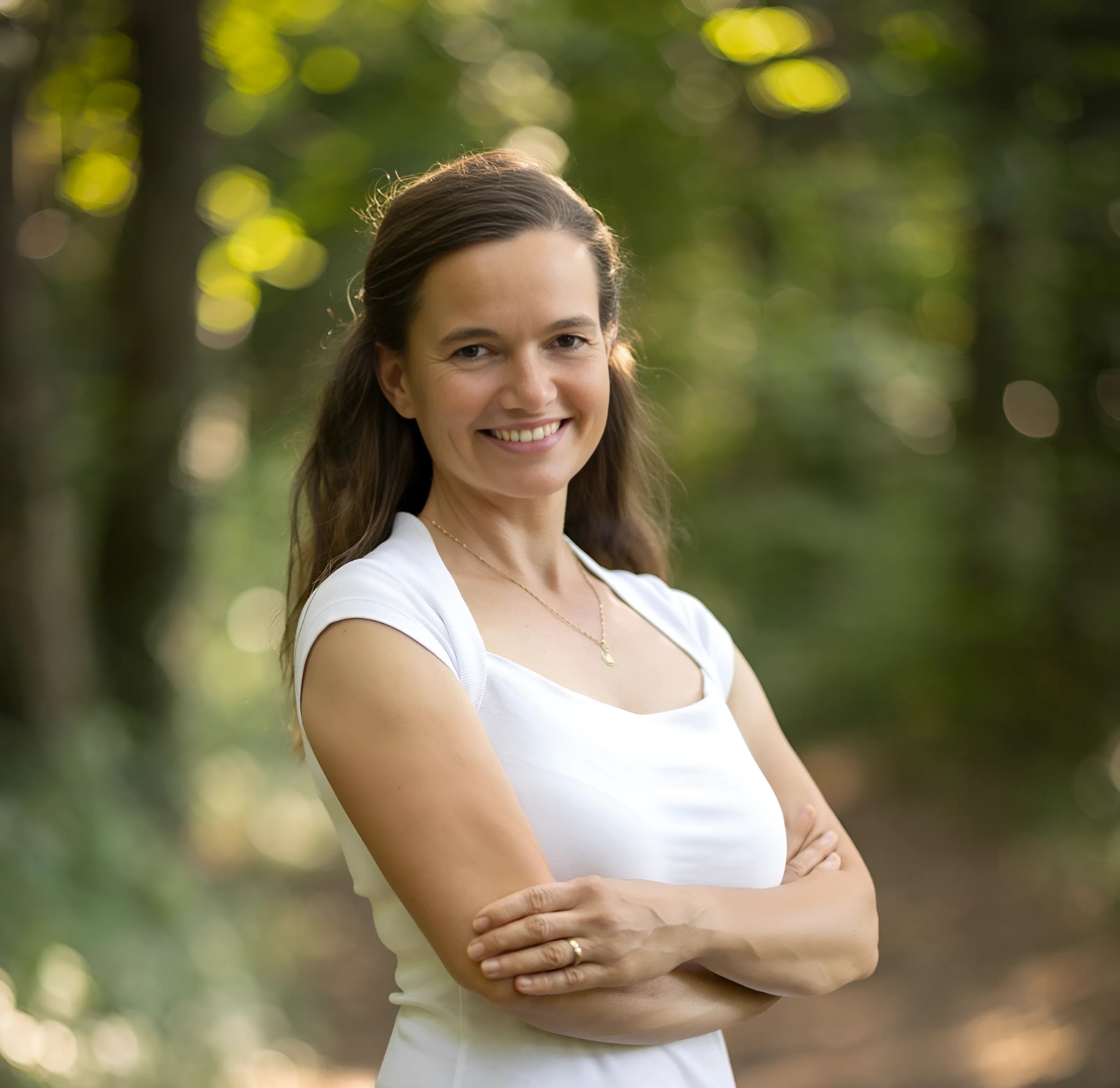
Klavdija Svet is an educator, author and organisational pioneer with more than twenty years of experience in early childhood education. In 2021 she founded Kindergartens International Institution, devoted to helping educators rise above every challenge, master their well-being, and inspire the next generation to thrive. She is the author of Elevate to Educate and creator of the MAP Framework (Mindset, Awareness, Purpose), a model for the personal and professional growth of educators she regards as architects of the future. As President of OMEP Slovenia, she advocates for every child's access to quality early education, and in 2025 she designed a comprehensive forest kindergarten programme to become one of Slovenia's officially recognised alternative educational programmes, alongside a one-year forest pedagogue training delivered with an international expert council. It was her initiative that brought the founders of IANEC together, and today she continues building a global movement of resilient educators, transforming the future of education from the inside out. Her organisational skill, legal grounding in Slovenia, and steady, heart-centred leadership remain instrumental in turning a shared global vision into a working association.
Klavdija Svet, Slovenia
Vice President of IANEC

Monica Wiedel-Lubinski has pursued her love of nature-based education for nearly three decades. She is the founding director of the Association for Nature-Based Education (ANBE), and founder or cofounder of three forest and nature preschools in Maryland, helping countless educators nurture children's relationships with the natural world. As an author, she shares the benefits of nature-based learning through her award-winning book, Nature Play Workshop for Families: A Guide to 40+ Outdoor Learning Experiences in All Seasons (Quarto Press, 2020), coauthored with Karen Madigan, and her most recent work, Nature-Based Early Childhood Education (NAEYC, 2025). A dedicated policy advocate, she helped spearhead Maryland's outdoor preschool licensing pilot and serves on Governor Moore's Committee for Outdoor Learning Partnerships. As IANEC's Secretary General, Monica brings decades of grassroots experience and policy leadership to strengthen the association's global mission, advancing equitable access to nature-based education and building bridges between research, practice, and advocacy worldwide. Always optimistic, she looks forward to continued advocacy that expands access to nature-based education at the local and international levels.
Monica Wiedel-Lubinski, USA
Secretary General of IANEC
Dušan Bartůněk is a visionary educator and a pioneer in the field of outdoor learning and experiential pedagogy. With over 25 years of experience, dr. Bartůněk serves as the Managing Director of Outdoored, where he has led hundreds of international training courses across Europe—from the forests of Sweden to the landscapes of Iceland and Cyprus. His work focuses on transforming "nature into a classroom," utilizing sensory-based learning and experiential games to foster resilience, creativity, and ecological awareness in both students and educators. His leadership in the IANEC represents a significant step forward in uniting nature-based movements globally and ensuring that the next generation thrives in harmony with nature.


Dušan Bartůněk Czech Republic


Doug Fargher is the founder of Australia's Bush Kinder movement. On a land where Aboriginal People have long understood the inseparable relationship between nature and learning, the benefits of nature pedagogy had largely been overlooked by conventional education in Australia. Drawing on his own childhood, decades of experience in early childhood education, and research, Doug created Bush Kinder. Developed in collaboration with a dedicated professional team and parent community, the uniquely Australian model—free from toys, tools and art supplies, and aligned with Australian curriculum frameworks — has inspired hundreds of Bush Kinders across the country. Doug believes that children who learn in nature grow happier, healthier, stronger, smarter, kinder and more connected—not only to the natural world, but also to one another and to their responsibilities as active, ethical citizens. His work continues to inspire educators to see nature pedagogy not simply as an educational approach, but as a movement for social and ecological justice, where children's wellbeing, community and the future of the planet are deeply interconnected.
Doug Fargher Australia
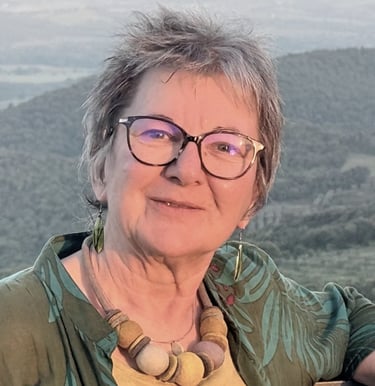
Elizabeth Henderson is a distinguished researcher, writer and pioneer in the field of early childhood education and care, specialising in the vital role of nature pedagogy, wellbeing, sustainability and indigenous pathways. Dr Henderson is the original founder of Nature Nurture, a project for children under 3 years-of-age from challenging backgrounds. She is also the founder of a Community of Practice in her local city of Aberdeen, Scotland, supporting early childhood practitioners in their outdoor work. She is an international speaker and trainer and her work is both innovative and original. As an experienced pedagogue in sensory-based nature experiences and therapeutic outdoor engagement, she promotes a deep sense of belonging to place, thereby nurturing emotional resiliency. Elizabeth also values the imagination and pathways of the heart as ways to nurture wholeness. Her leadership in the IANEC is instrumental in bridging rigorous academic research with grassroots practice, ensuring that the global forest kindergarten movement remains grounded in the intention to build deep and meaningful relationships with our more-than-human kin.
Elizabeth Henderson Schotland


Uroš Jelen is a physical education and sport teacher whose work is guided by a simple conviction: movement is the heart of life. For nearly two decades he has worked with children, believing that education and awareness flourish most naturally through play, physical activity, and experience in nature. His approach weaves together neuroscience, human movement, and the natural reflexes that first shaped us, connecting research with practical, hands-on teaching. Uroš graduated from the Faculty of Sport, University of Ljubljana (2008), specialised in Kinesiotherapy at Keele University, England (2011), and completed the International Bothmer Gymnastics and Sport Education programme (2021–2025). He teaches at a Waldorf School, leading nature camps, outdoor games, and movement and circus activities, and developing outdoor living and survival experiences for students. As a core professional contributor to the Slovenian Network of Forest Kindergartens and Schools, his work focuses on how the diverse, uneven terrain of the forest serves as a unique classroom for neuro-motor development and physical resilience.
Uroš Jelen Slovenia


Pamela Martinez is the founder and director of Nature Plays Forest School. Beyond day-to-day practice, Pamela works at the policy level, bridging UK Forest School Association pedagogical guidelines and South African early childhood development regulation — in a national context where no dedicated outdoor learning framework yet exists. Rather than treating this gap as a limitation, she sees it as an opportunity: a chance to help shape what outdoor-education regulation could look like for South Africa and, more broadly, for regions where formal frameworks are still emerging.
To the IANEC, Pamela is bringing a Southern Hemisphere voice still under-represented in a field largely shaped by European and North American practice; direct experience translating established frameworks into contexts without formal outdoor-education policy; practical, grounded knowledge of running outdoor education at multi-site scale; a warm, relational communication style suited to building member communities of practice; and a cross-continental network spanning African and Latin American outdoor-education circles.
Pamela Martinez
South Africa


Dr Szymon Godawa is a psychologist, Gestalt psychotherapist, educator, and academic at the University of Silesia in Katowice. At the University of Silesia, he is the Head of the postgraduate programme “Education and Rehabilitation of People with Autism Spectrum Disorders”. His research focuses on neurodiversity, early developmental support, outdoor education, and the role of natural environments in children’s wellbeing and functioning. He conducts research in forest pedagogy, forest psychology, outdoor therapy, and the use of nature in work with autistic children. In his research, he brings together clinical psychology and forestry-related perspectives, seeking interdisciplinary models for supporting development, regulation, and wellbeing. He develops scientific and educational collaboration with universities, researchers, and educational institutions in Europe and beyond, participating in projects, research internships, conferences, and international knowledge exchange. A particular emphasis of his work is on bridging scientific research with educational and therapeutic practice, and on developing support models in which the natural environment becomes a meaningful context for relationships, development, learning, and everyday functioning.
Szymon Godawa
Poland
We launched a website in March 2026 with team of three determination to build the infrastructure the global forest kindergarten movement deserves.
In April 2026, we are assembling our founding coalition — the organisations from across the world who will shape IANEC's governance, standards, and direction in its first years. We are building the Global Directory. We are developing the Quality Principles Framework. We are planning the first IANEC Annual Summit.
By 2029, we aim to have active members on every inhabited continent, a global directory of more than 5,000 forest kindergartens, and a recognised voice in international early childhood education policy.
We are early. The work is real and ongoing. And we are building it with the practitioners who know, from daily experience, exactly what is at stake.
Where we are heading
Join the movement
The forest has always been generous with what it gives to us.
We are trying to build something worthy of that.
If you run a forest kindergarten, we want you on the map.
If you lead a national association, we want you at the table.
If you are a researcher, we want your work in the conversation.
If you are a parent who believes in this — tell another parent.
If you have any questions, we are here to answer them.
Contact us
© International Association For Nature-based Early Childhood
Established in Slovenia. Connecting the world.


Pregljeva 9, Maribor, Slovenia




Together we can achieve it!
About