How it began
How one Slovenian kindergarten teacher's search for a forest kindergarten association led to a "you do it" moment, and the global founding circle that answered yes.
IANEC
dr. Elizabeth Henderson (Scotland)
dr. Dušan Bartůněk (Czech Republic)
Uroš Jelen (Slovenia)
Monica Wiedel-Lubinski (USA)
Pamela Martinez (South Africa)
dr. Midori Mitsuhashi (Japan)
Doug Fargher (Australia)
Niki Buchan (UK)
dr. Szymon Godawa (Poland)
Klavdija Svet (Slovenia)
Where you come in
There is a small forest near the school where I taught for ten years.
The trees are not remarkable. The path is not famous. But every time I took my kindergarten class there — the children changed. So, did I.
Whatever we had been carrying when we walked in, the forest seemed to lift off our shoulders.
How it all began
Ten years, one observation
I noticed it again and again. Year after year. The shy children spoke. The loud children softened. The ones who struggled to sit still found their own quiet rhythm among the trees. I would come home from those days lighter myself, and I would think: this is the real classroom.
I have always been drawn to science and to alternative approaches in education. After years of reading — and rigorous research for my book Elevate to Educate on the importance of teacher wellbeing — everything fell into place. The forest, I concluded, is the answer. The biggest effect for the least effort.
So, I wrote a forest kindergarten programme for Slovenia, with one quiet goal: to have it officially recognised as an alternative educational path.
A wall I did not expect
The paperwork required documentation from an international association.
But there was none.
Not in Europe. Not anywhere. The oldest, best-loved tradition in outdoor early childhood education had no international body. I could not quite believe it.
Berlin: the question I kept asking
November 2025, I went to the international forest kindergartens congress in Berlin looking for answers. What I found instead were extraordinary people — among them Dr Elizabeth Henderson, whose work and warmth I truly admire. I encouraged nearly everyone I met to build international association.
The most answers I received was a kind, half-apologetic “no.” Not because the idea was wrong, but because each person who said it felt the work was too big for them. Who am I, several of them said, to build something like that?
I went home confirmed in my direction but unsatisfied. The thought about international association would not leave me.
Then I heard it
Back in Slovenia I tried to focus on something more practical: a one-year teacher training in forest pedagogy, the kind required for forest kindergarten educators. The Institute for Forest Pedagogy in Slovenia turned me down kindly — they had enough work with public schools. So I set about organizing my own international group of trainers.
It was during that work — building the trainer group, asking colleagues yet again about an international association, hearing yet again that polite not me — that inside me I heard very clear voice: You do it.
It surprised me a lot. But from my experiences, I knew it must be followed through. After I agreed I immediately felt a sense of upliftment and immense energy pushed me forward in making first steps.
Twelve people. Six continents. Practitioners, researchers, association leaders, university lecturers, lifelong outdoor educators. Very different cultures, very different paths into this work — all of us holding one quiet, stubborn belief: that early childhood belongs outdoors, and that the world is ready for a connected, global voice for what that means.
On 20 June 2026, we will meet for the first time. Our goal is to agree together on the Purpose, Principles and Goals of the International Association for Nature-based Early Childhood (IANEC). The meeting will be online, ninety minutes long, and the conversation that begins there will shape everything that follows.
After organization is legally established, the work begins in earnest. A quality framework that respects national context but means something globally. A research bridge that turns evidence into daily practice. A global directory that connects forest kindergartens across countries. A professional home for outdoor educators wherever they are.
What happened after that was exciting.
With the support of Uroš Jelen, Dušan Bartůněk and Elizabeth Henderson — and a great deal of modern research tools and quiet outreach — I began identifying potential founding members. The criteria were simple: each should be a credible voice in their country, internationally connected, and willing to build something rather than only join it.
One by one, the yeses came back. From every continent where the forest kindergarten field is alive today.
Our founding circle:
Twelve people, six continents
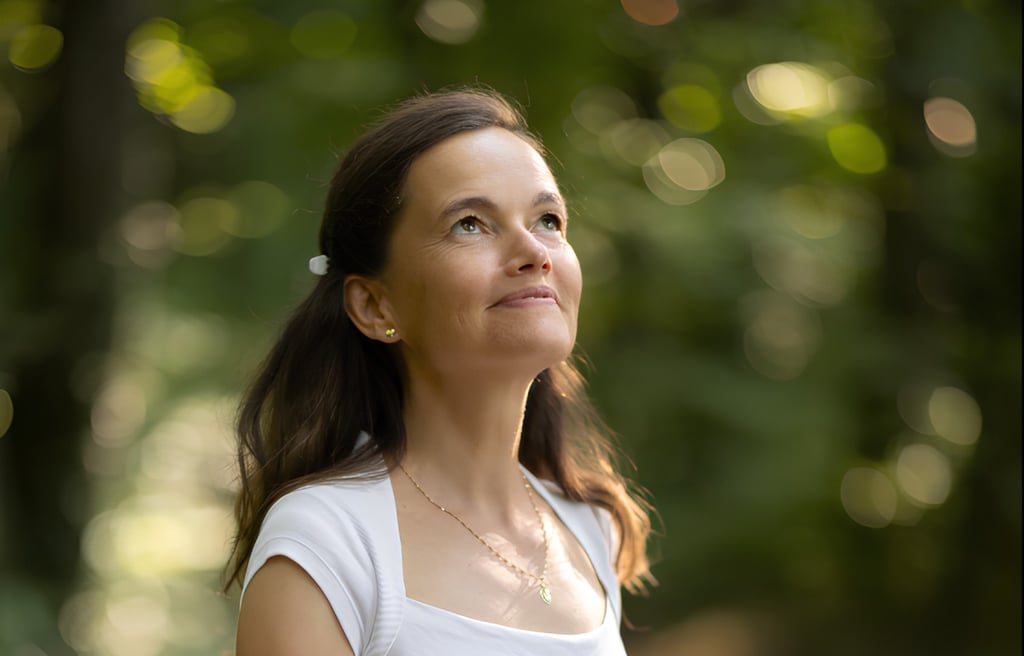
Written by: Klavdija Svet
If you are an educator, researcher, association, or forest kindergarten reading this — wherever you are in the world — we would love to know you.
Visit our global directory. Add your programme to the map. Tell us your story. The longer I sit with this work, the more certain I am that it will not be built by one person, or by twelve. It will be built by many of us, over many years, in many languages.
This began with a teacher and a small forest in Slovenia. It is now a founding circle on six continents. What it becomes next — that is for all of us to decide together.

© International Association For Nature-based Early Childhood
Established in Slovenia. Connecting the world.
Pregljeva 9, Maribor, Slovenia



Together we can achieve it!
About